Day 1
Route: Entebbe – Mabamba
Distance: approx. 22km
Driving time: approx. 45 – 60 minutes (depending on traffic)
Overnight: Mabamba Lodge
Every meaningful journey deserves an unhurried beginning.
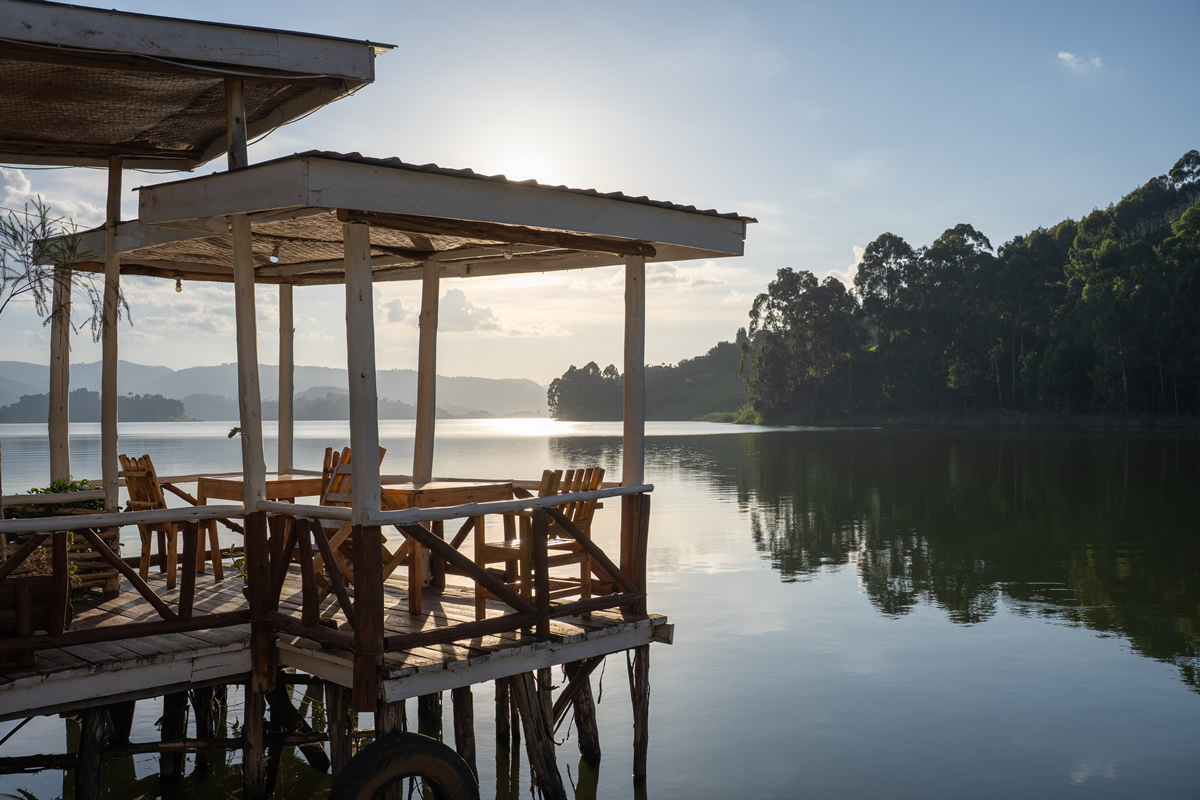
After arriving in Entebbe, you leave the bustle of the airport behind and head towards the peaceful shores of Lake Victoria. Within a short time, busy roads give way to lush gardens, towering trees and the relaxed rhythm that characterises Uganda's lakeside communities.
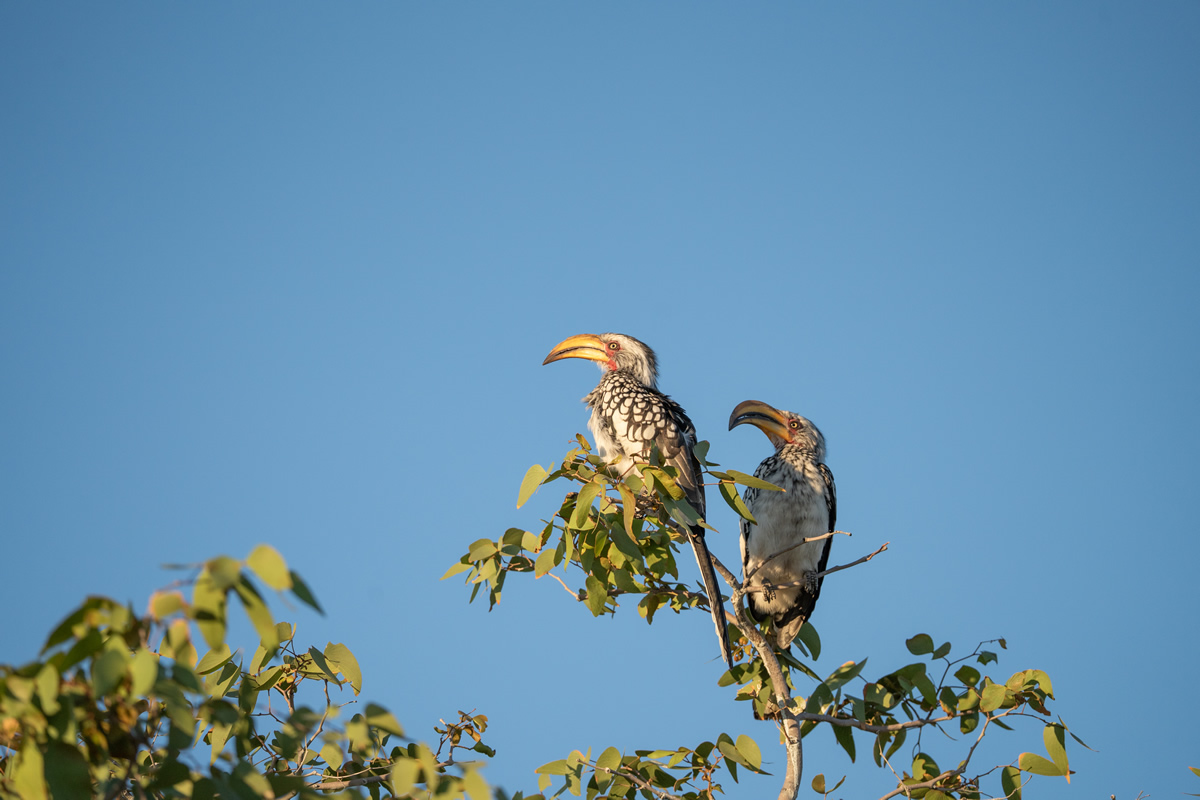
Your lodge provides the perfect setting to ease into the adventure ahead. Set among tropical gardens, it offers an opportunity to slow down after your journey and enjoy your first impressions of Uganda. Even before the safari officially begins, birdlife is everywhere. Sunbirds visit flowering shrubs, hornbills move through the treetops and colourful weavers are already busy building their intricate nests.
If time allows, you are welcome to join your guide for a relaxed walk around the lodge grounds. It is not about building an impressive bird list on the first day. Instead, it is an opportunity to become familiar with Uganda's remarkable birdlife, adjust your eyes and ears to a new environment, and settle into the gentle rhythm that will accompany you throughout the journey.
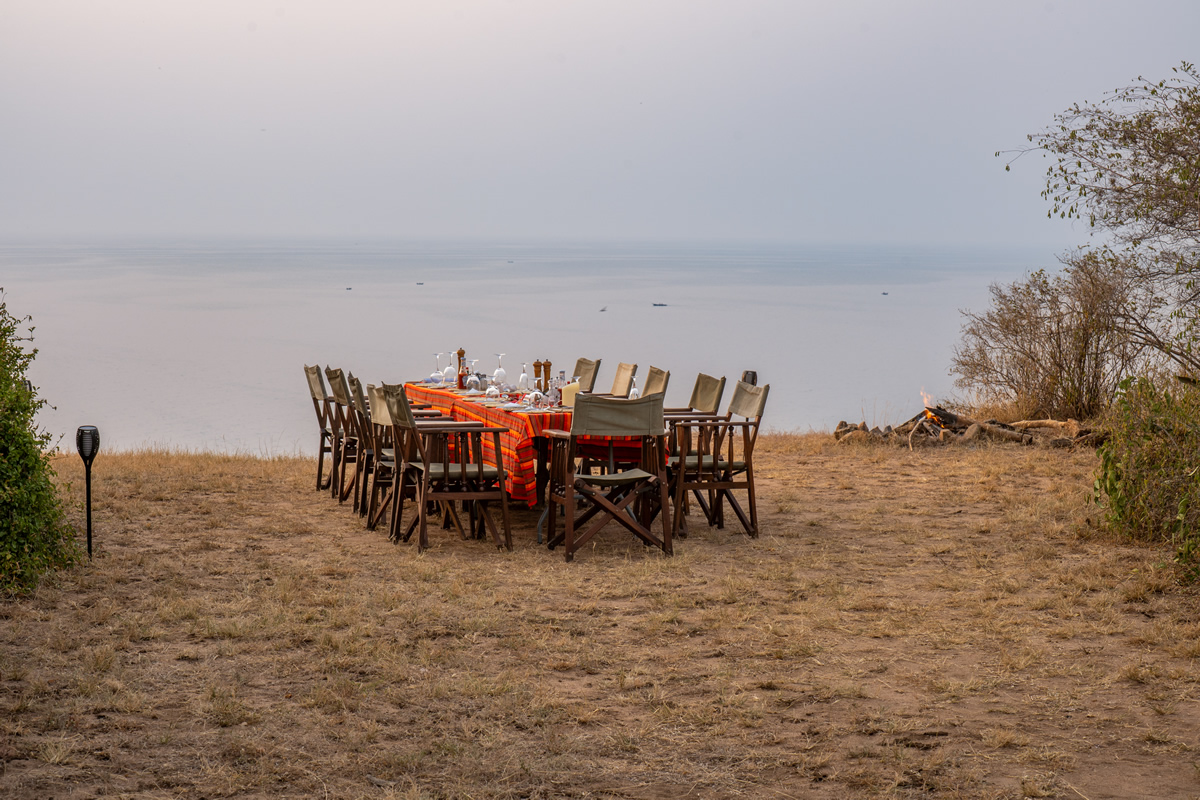
As evening falls, the changing light over Lake Victoria provides a peaceful setting to begin your journey. As the sun sets over Lake Victoria, you meet your guide and fellow travellers for a relaxed welcome drink before dinner.
In the evening, your guide introduces the route ahead. Over the coming days, you will travel through five remarkable habitats, each with its own landscapes, wildlife and unique birdlife. Rather than simply visiting national parks, this journey has been designed to reveal how dramatically Uganda's ecosystems change—and how each habitat tells its own story.
Today's Highlights
- Arrival at Mabamba Lodge on the shores of Lake Victoria
- First introduction to Uganda's birdlife
- Optional bird walk through the lodge gardens
- Welcome Briefing
Today's Habitat
Lake Victoria Shoreline
The shores of Lake Victoria form the gateway to Uganda's extraordinary birdlife. A mosaic of gardens, woodland, wetlands and open water creates ideal conditions for many colourful and easily observed species, making it the perfect introduction to the days ahead.
Signature Species
- Great Blue Turaco
- Black-and-white-casqued Hornbill
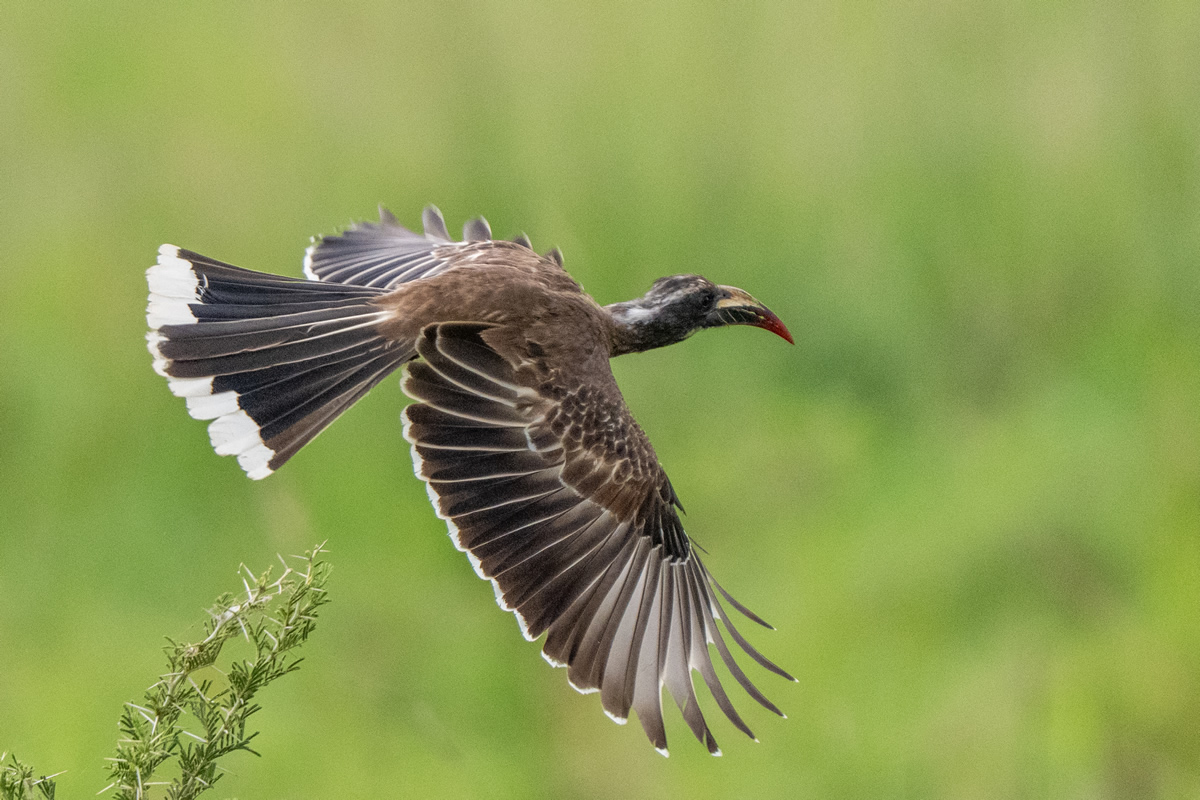
- African Pied Hornbill
- Scarlet-chested Sunbird
- Black-headed Gonolek
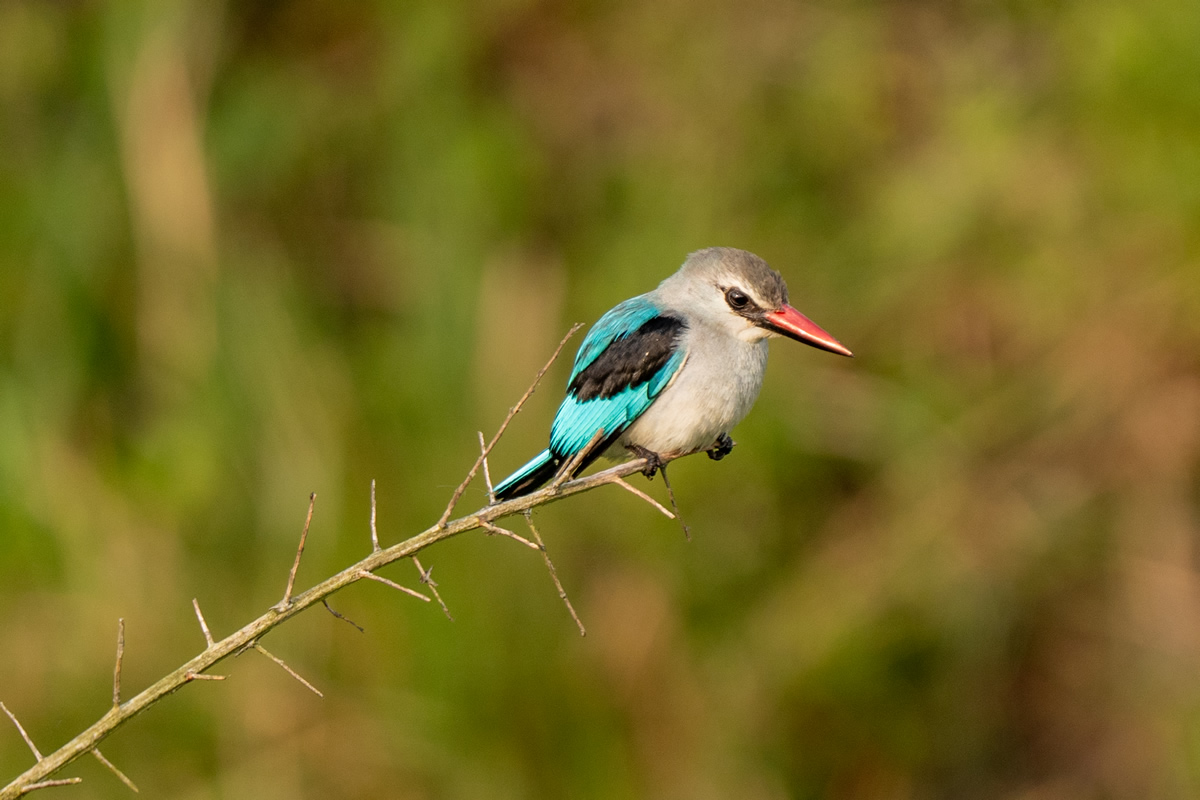
- Woodland Kingfisher
Pure Nature Moment
Every experienced birder remembers the first bird of a journey. Not because it is rare, but because it marks the moment when everyday life begins to fade into the background. From here on, your attention shifts. You start listening more carefully, looking more closely, and noticing details that might otherwise have gone unnoticed.

Day 2
Route: Short excursions in the surrounding area
Overnight: Mabamba Lodge
The day begins before the heat of the African sun reaches the papyrus.
As dawn breaks over Lake Victoria, you set out for the Mabamba Wetland, one of Africa's most important wetland birding areas and a place where patience is rewarded far more often than haste. There is no fixed route through this vast network of waterways. Each morning follows its own rhythm, guided by recent sightings, changing conditions and the experience of those who know the wetland best.
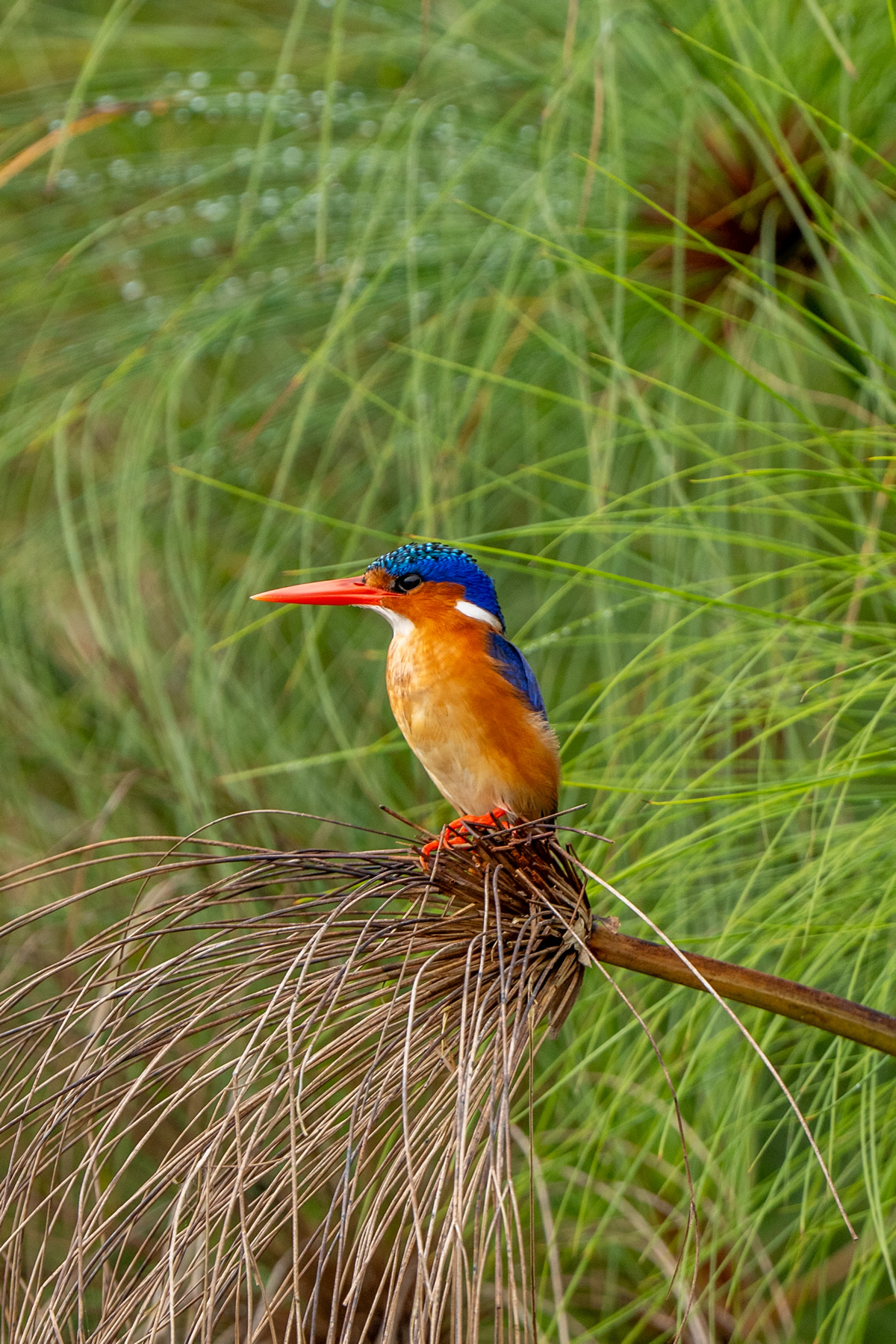
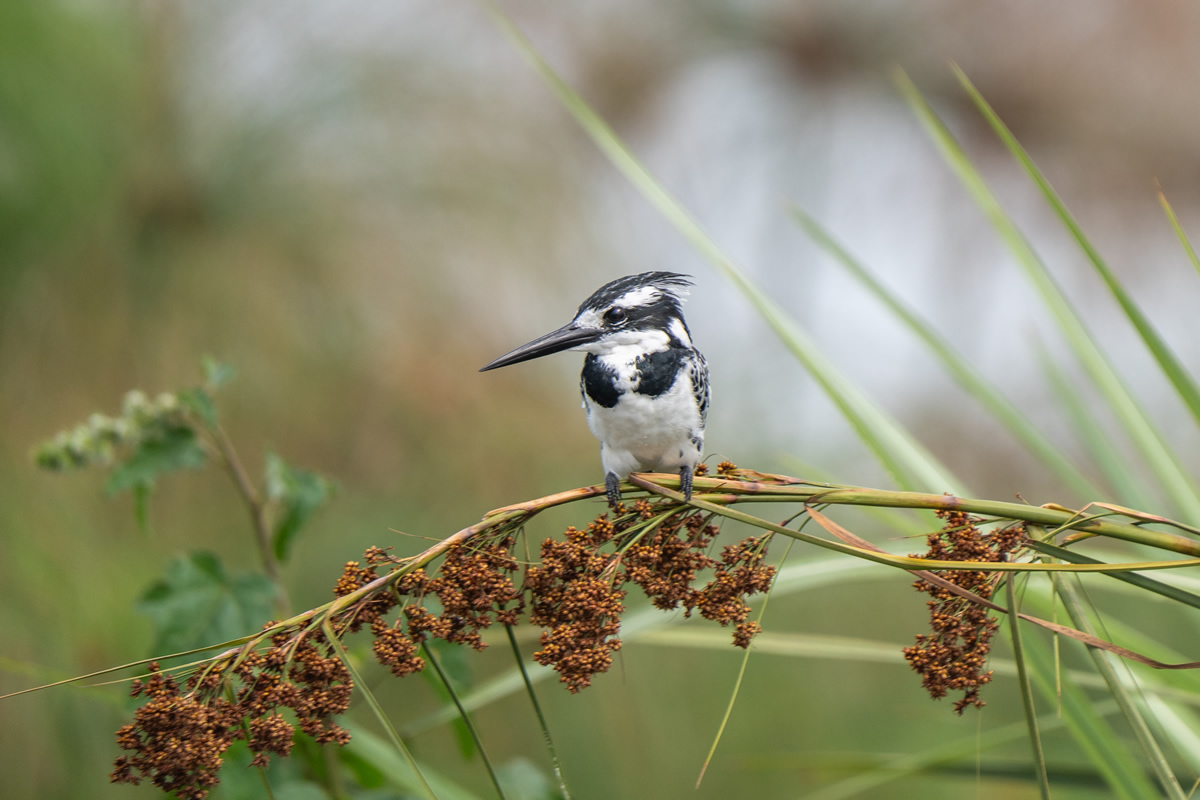
A narrow wooden boat carries you quietly through channels bordered by towering papyrus. The pace is slow, allowing time to scan every opening in the vegetation. A kingfisher flashes across the water, jacanas step lightly across floating lilies and distant calls reveal birds long before they come into view.
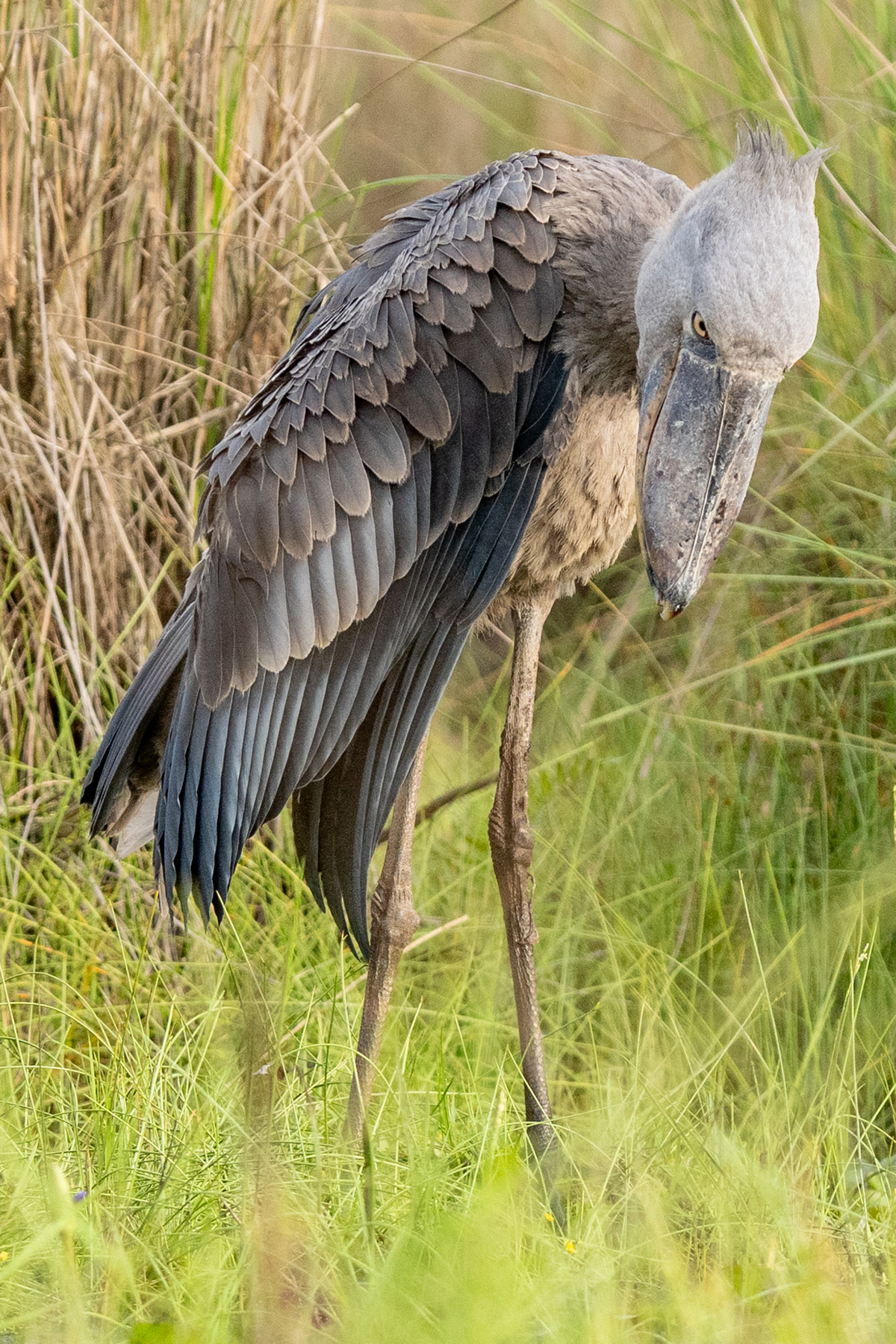
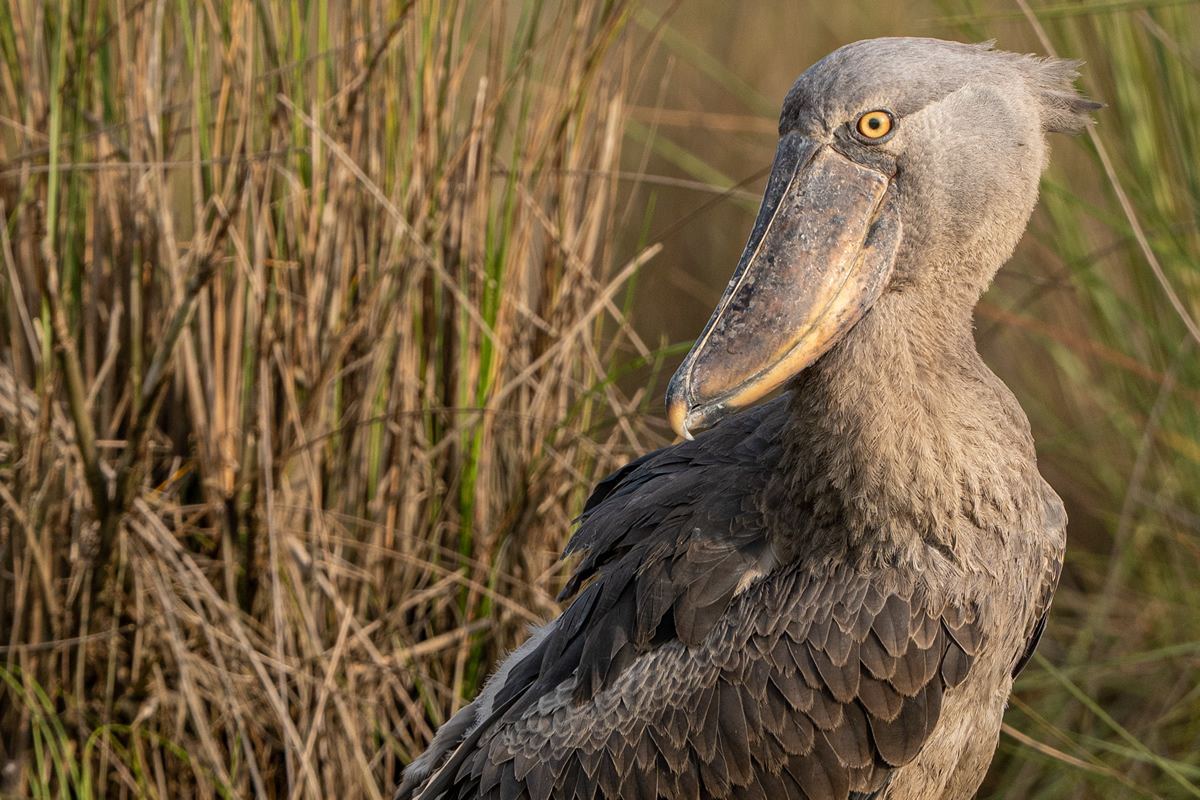
Mabamba is famous for one extraordinary resident. Searching for the Shoebill is an experience unlike any other. It is not a matter of simply travelling from one sighting to the next. It is a careful search that unfolds gradually—watching, listening and waiting together. Then, sometimes almost unexpectedly, a guide pauses and points towards a gap in the papyrus. Standing perfectly still, barely moving, is one of Africa's most remarkable birds.
Whether the Shoebill reveals itself quickly or keeps you searching a little longer, the experience is about far more than a single species. Mabamba offers an introduction to the quiet concentration that defines birdwatching at its best and a first glimpse into the remarkable diversity that makes Uganda one of the world's premier birding destinations.
Back at the lodge, a relaxed breakfast and some time to unwind provide a welcome pause before returning to the wetland in the late afternoon. As the light softens, bird activity increases once more, offering fresh opportunities to explore different sections of this remarkable ecosystem and discover species that remained hidden earlier in the day.
Today's Highlights
- Sunrise boat excursion in the Mabamba Wetland
- Search for the elusive Shoebill
- Exceptional papyrus specialist species
- Late afternoon birding session
Today's Habitat
Papyrus Wetlands
Covering thousands of hectares along the northern shores of Lake Victoria, the Mabamba Wetland is one of East Africa's most important papyrus ecosystems. Its dense vegetation, open lagoons and winding channels provide ideal habitat for a remarkable diversity of wetland birds, including several species that are difficult to observe anywhere else in Uganda.
Signature Species
- Shoebill
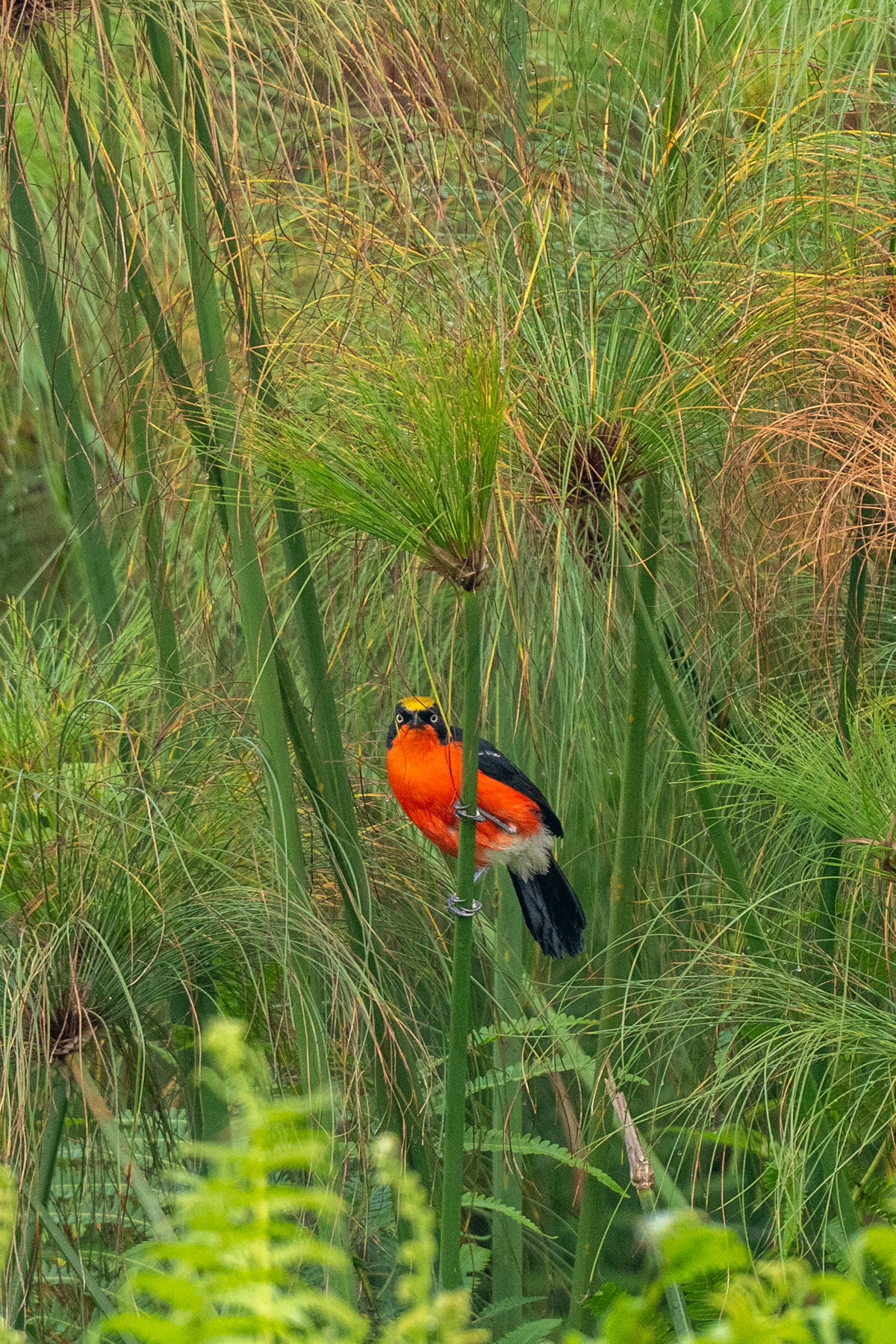
- Papyrus Gonolek
- White-winged Warbler
- Lesser Jacana
- African Pygmy Goose
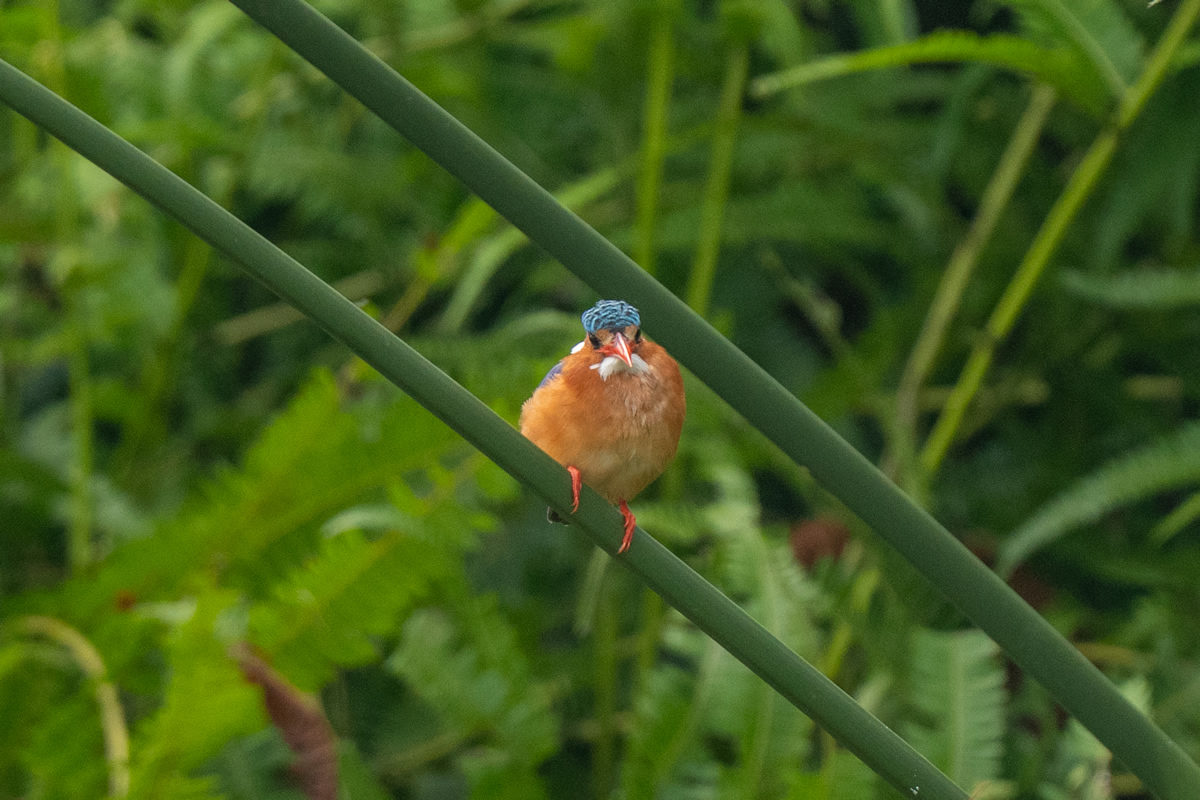
- Malachite Kingfisher
Pure Nature Moment
Birdwatching rarely follows a schedule. Some of the most memorable encounters happen after long periods of quiet observation, when nothing seems to happen at all. In Mabamba, you soon discover that waiting is not empty time—it is part of the experience.

Day 3
Route: Mabamba – Kibale Forest National Park
Distance: approx. 320 km
Driving time: approx. 7 hours
Overnight: Ensiko Primates Lodge
This morning, you leave the shores of Lake Victoria behind and begin your journey west towards Kibale Forest National Park.
The drive is more than a transfer between destinations. It is an opportunity to experience the remarkable variety of Uganda's landscapes. As the kilometres pass, bustling towns give way to rolling farmland, tea plantations cover the hillsides and the first mountain ranges begin to emerge in the distance. With every kilometre, Uganda reveals another facet of its remarkable diversity.
Along the way, there is time to stop whenever something catches your guide's attention. A flowering tree alive with sunbirds, a roadside wetland attracting herons and weavers, or a soaring raptor riding the warm afternoon air—birding in Uganda rarely follows a strict schedule, and some of the most rewarding observations happen when least expected.
By early afternoon, the landscape changes once again. The air becomes cooler and more humid, while dense forest begins to replace open countryside. Welcome to Kibale Forest, one of East Africa's most important remaining tropical rainforests and home to an extraordinary diversity of birds, mammals and primates.
If time allows, your first birding walk takes place in the forests surrounding the lodge. The sounds are different here. Instead of open wetlands, the rainforest is filled with whistles, calls and rustling leaves, often revealing its inhabitants long before they are seen. It is a gentle introduction to the next chapter of your journey.
Today's Highlights
- Scenic drive through rural Uganda
- Visit to a tea plantation, including an insight into tea cultivation and production
- Birding opportunities en route
- Arrival at Kibale Forest
- First rainforest birding walk (time permitting)
Why We Chose This Lodge
Ensiko Primates Lodge is much more than a place to spend the night. Created by German-born Isolde Nowack and her Ugandan husband Jones, it reflects a genuine passion for hospitality and conservation. Nestled in beautiful gardens on the edge of Kibale Forest, the lodge offers a peaceful atmosphere where birds are never far away.
Today's Habitat
Tropical Rainforest
Kibale Forest protects one of East Africa's largest remaining tracts of tropical rainforest. Towering trees, dense undergrowth and a complex forest canopy create ideal conditions for an exceptional variety of forest birds, including many species that are difficult to observe elsewhere.
Signature Species
- Great Blue Turaco
- Black Bee-eater
- African Emerald Cuckoo
- African Green Pigeon
- Yellow-spotted Barbet
- Joyful Greenbul
Pure Nature Moment
Every habitat has its own sound. In the rainforest, you often hear the forest long before you understand what you are listening to. At first, it feels almost overwhelming. Then, little by little, individual calls begin to stand out, and what first seemed like noise becomes a conversation.

Day 4
Route: Short excursions in the surrounding area
Overnight: Ensiko Primates Lodge
The rainforest awakens long before sunrise.
As the first light filters through the towering trees of Kibale Forest, the forest is already alive. Birds announce the new day from every level of the canopy, while the calls of distant primates echo through the mist. This is one of Africa's richest forest ecosystems—a place where every walk reveals something different.
Today's birding begins early, when activity is at its peak. Moving slowly along forest trails, your guide listens as much as he looks. A barely audible whistle, a sudden movement high in the canopy or the distinctive call of a turaco may be enough to change direction. Birding in the rainforest is unlike searching across open landscapes. Here, patience and careful observation are often rewarded with encounters that last only a few fleeting seconds.
Kibale is home to more than 370 recorded bird species, including many sought-after forest specialists. With a little luck, you may encounter the dazzling Green-breasted Pitta, one of Uganda's most iconic and elusive birds. Yet even without one particular highlight, every hour in the forest reveals new colours, calls and behaviours that make rainforest birding so endlessly fascinating.
During the warmest hours of the day, you return to the lodge for a leisurely lunch and time to relax before heading back into the forest later in the afternoon. As the light softens once again, different species become active, offering a completely new perspective on the forest before another peaceful evening at Ensiko.
Today's Highlights
- Full-day birding in Kibale Forest
- Search for forest specialists
- Morning and afternoon birding sessions
- Time to relax at Ensiko Primates Lodge
Today's Habitat
The Rainforest Canopy
A tropical rainforest is often described in layers. From the forest floor to the towering canopy, each level supports its own community of birds, mammals and insects. Understanding these layers is one of the keys to successful rainforest birding—and one of the reasons why every walk feels different.
Signature Species
- Green-breasted Pitta
- Black Bee-eater
- African Pitta (seasonal)
- Yellow-spotted Barbet
- White-naped Pigeon
- Red-headed Bluebill
Pure Nature Moment
Rainforest birding teaches you to let go of expectations. Some birds reveal themselves immediately, others remain hidden despite hours of searching. Yet every walk leaves you with the feeling that the forest has shared a small part of its story—and quietly kept the rest for another day.
Day 5
Route: Short excursions in the surrounding area
Overnight: Ensiko Primates Lodge
The forest feels different today.
You may not notice it at first, but as you walk beneath the towering trees, there is a growing sense of anticipation. Somewhere ahead, hidden beyond the dense vegetation, a branch cracks. A distant call echoes through the canopy. Then another. The forest seems to pause for a brief moment before suddenly coming alive.
This morning, you set out in search of Kibale's famous chimpanzees. Accompanied by experienced rangers, you follow fresh signs through the forest, listening carefully and adapting your route as the chimpanzees move through their home range. Every trek is different, and no two encounters are ever the same.
Finding the chimpanzees is only part of the experience. Watching them interact within their natural environment offers a fascinating glimpse into a complex social world. Youngsters chase one another through the trees, mothers patiently care for their infants, while dominant males announce their presence with powerful calls that carry through the forest. For one remarkable hour, you become a quiet observer in a world that has remained largely unchanged for thousands of years.
After returning to the lodge for lunch and some time to relax, the afternoon invites you back into the forest—but with a different focus. Without the excitement of tracking primates, your attention naturally returns to the birds. The same trails reveal new discoveries, reminding you that every walk through Kibale tells a different story.
Today's Highlights
- Chimpanzee tracking in Kibale Forest
- One hour observing habituated chimpanzees
- Afternoon birding in the rainforest
- Guided rainforest experience
Today's Habitat
Life Beneath the Canopy
The rainforest is a living network in which every species plays a role. Birds disperse seeds, insects pollinate flowers, primates shape the forest through their feeding behaviour, and towering trees provide shelter for countless forms of life. Experiencing Kibale means discovering not only individual species, but the intricate relationships that connect them.
Signature Species
- Green-breasted Pitta
- Black Bee-eater
- Yellow-billed Barbet
- African Grey Parrot
- Blue-headed Sunbird
- White-tailed Ant Thrush
Pure Nature Moment
Chimpanzees are often described as our closest living relatives. Yet what stays with many travellers is something much simpler: a brief moment of eye contact, a playful youngster swinging through the trees, or the quiet confidence with which the group moves through the forest. For a short while, you are not just watching wildlife—you are sharing the same forest.

Day 6
Route: Kibale Forest National Park – Queen Elizabeth National Park
Distance: approx. 120 km
Driving time: 3 – 4 hours
Overnight: Elephant Hab Lodge
This morning, the rainforest slowly disappears in the rear-view mirror.
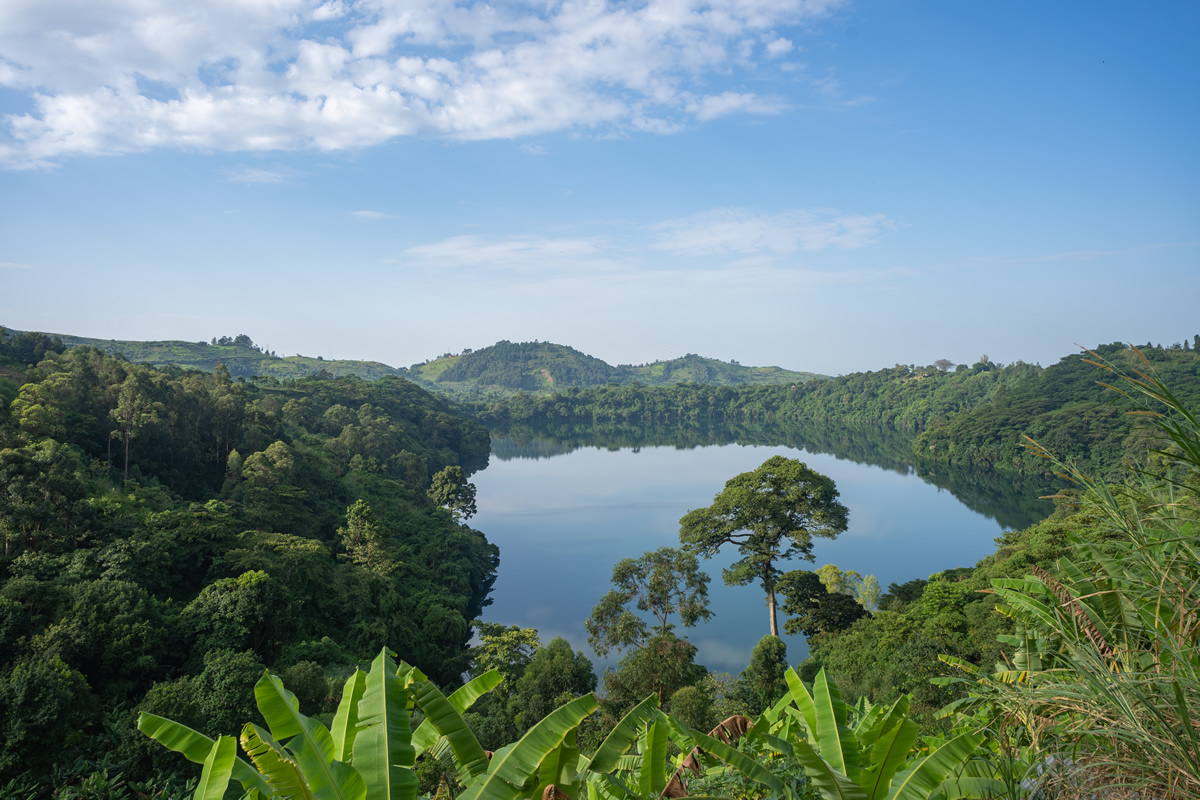
Leaving Kibale behind, the road winds through rolling hills, crater lakes and small farming communities before the landscape begins to open. Dense forest gives way to wide grasslands, scattered acacia trees and expansive views stretching towards the distant Rwenzori Mountains.
The transition is gradual, yet unmistakable. Birds that belonged to the forest are replaced by species of open country, while raptors circle high above the plains. Uganda's remarkable diversity is perhaps most evident on days like this, when entirely different ecosystems unfold within just a few hours' drive.
By midday, you arrive in Queen Elizabeth National Park. Few protected areas in East Africa combine such a remarkable variety of habitats. Here, savannah, wetlands, forests and volcanic crater lakes come together to create an astonishing variety of habitats, supporting more than 600 recorded bird species—the highest number of any national park in East Africa.
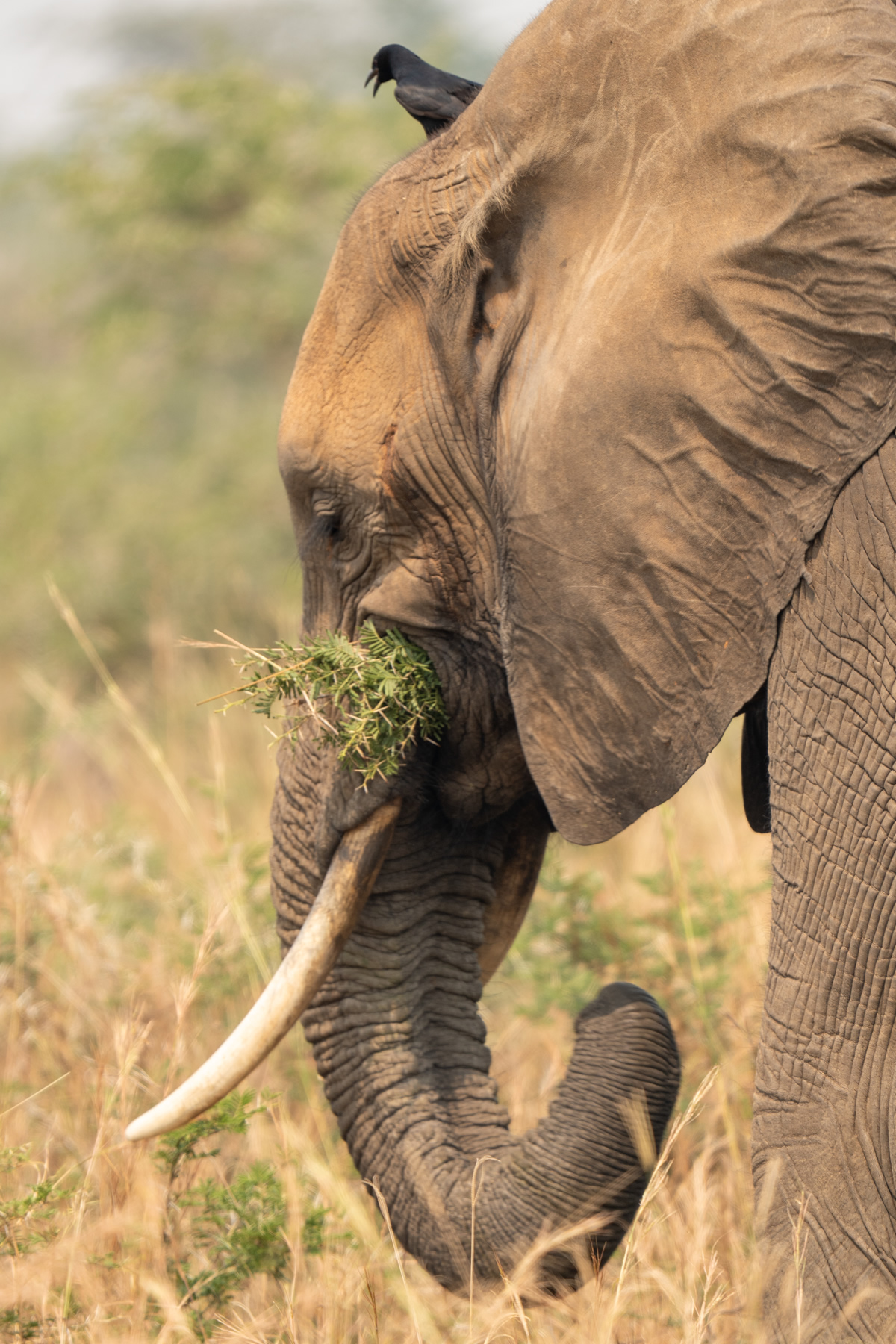
After some time to settle into your lodge, the afternoon is dedicated to your first exploration of the park. The pace is deliberately relaxed. Rather than trying to cover long distances, you begin to familiarise yourself with the rhythms of the savannah. Herds of Uganda kob graze across the plains, elephants emerge from the bush, and every stop reveals new birdlife adapted to this completely different landscape.
By sunset, the forest already feels far away.
Today's Highlights
- Journey from rainforest to savannah
- First game drive in Queen Elizabeth National Park
- Birding in a new ecosystem
- A chance to admire the Rwenzori Mountains—if they decide to reveal themselves
Today's Habitat
Savannah and Open Grassland
Unlike the layered complexity of the rainforest, the savannah offers space, light and long sightlines. Acacia woodland, open plains and seasonal wetlands create a rich mosaic of habitats that supports an extraordinary diversity of mammals and birds. Every stop reveals a different community of species, each perfectly adapted to life in the open landscape.
Signature Species
- Grey Crowned Crane
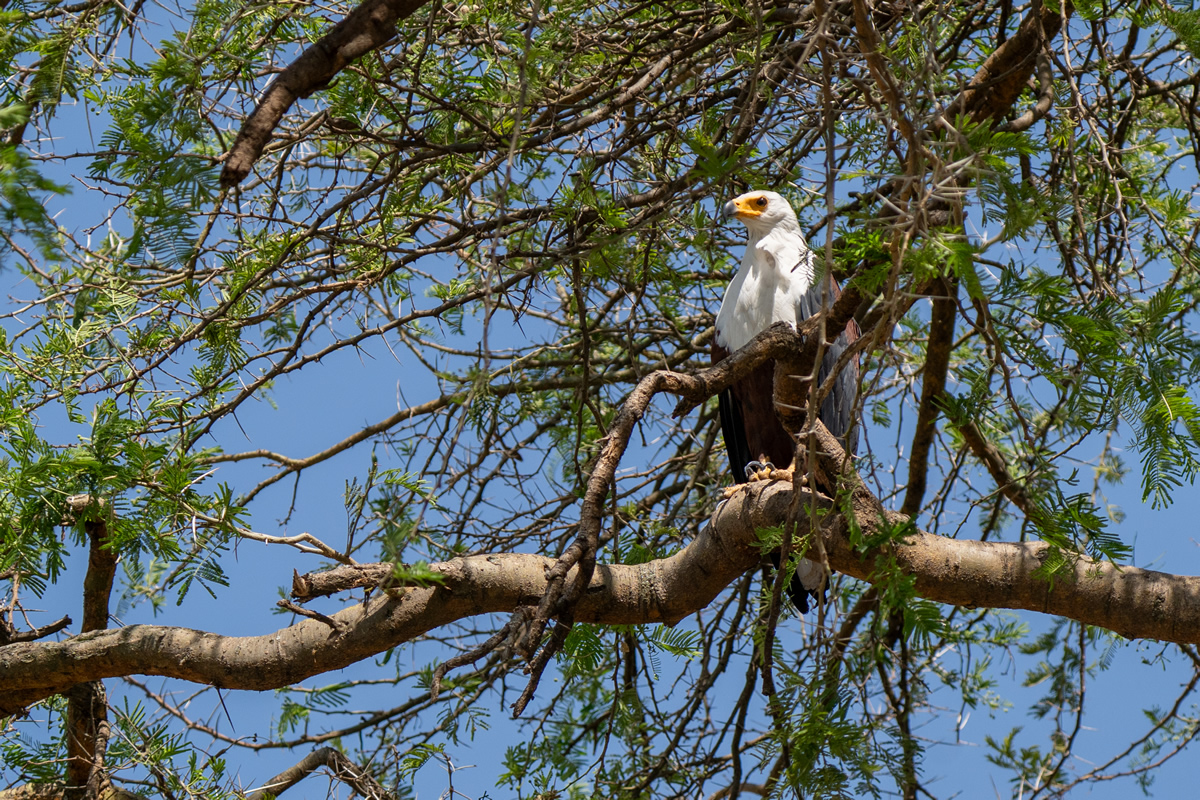
- African Fish Eagle
- Martial Eagle
- Lilac-breasted Roller
- Abyssinian Ground Hornbill
- White-browed Coucal
Pure Nature Moment
Every habitat has its own horizon. In the rainforest, your world was framed by towering trees. Here, the sky suddenly feels immense. Distances become harder to judge, silence takes on a different quality, and you begin to understand why every landscape shapes the wildlife that lives within it.
Route: Kibale Forest National Park – Queen Elizabeth National Park
Distance: approx. 120 km
Driving time: 3 – 4 hours
Overnight: Elephant Hab Lodge
This morning, the rainforest slowly disappears in the rear-view mirror.
Leaving Kibale behind, the road winds through rolling hills, crater lakes and small farming communities before the landscape begins to open. Dense forest gives way to wide grasslands, scattered acacia trees and expansive views stretching towards the distant Rwenzori Mountains.
The transition is gradual, yet unmistakable. Birds that belonged to the forest are replaced by species of open country, while raptors circle high above the plains. Uganda's remarkable diversity is perhaps most evident on days like this, when entirely different ecosystems unfold within just a few hours' drive.
By midday, you arrive in Queen Elizabeth National Park. Few protected areas in East Africa combine such a remarkable variety of habitats. Here, savannah, wetlands, forests and volcanic crater lakes come together to create an astonishing variety of habitats, supporting more than 600 recorded bird species—the highest number of any national park in East Africa.
After some time to settle into your lodge, the afternoon is dedicated to your first exploration of the park. The pace is deliberately relaxed. Rather than trying to cover long distances, you begin to familiarise yourself with the rhythms of the savannah. Herds of Uganda kob graze across the plains, elephants emerge from the bush, and every stop reveals new birdlife adapted to this completely different landscape.
By sunset, the forest already feels far away.
Today's Highlights
- Journey from rainforest to savannah
- First game drive in Queen Elizabeth National Park
- Birding in a new ecosystem
- A chance to admire the Rwenzori Mountains—if they decide to reveal themselves
Today's Habitat
Savannah and Open Grassland
Unlike the layered complexity of the rainforest, the savannah offers space, light and long sightlines. Acacia woodland, open plains and seasonal wetlands create a rich mosaic of habitats that supports an extraordinary diversity of mammals and birds. Every stop reveals a different community of species, each perfectly adapted to life in the open landscape.
Signature Species
- Grey Crowned Crane
- African Fish Eagle
- Martial Eagle
- Lilac-breasted Roller
- Abyssinian Ground Hornbill
- White-browed Coucal
Pure Nature Moment
Every habitat has its own horizon. In the rainforest, your world was framed by towering trees. Here, the sky suddenly feels immense. Distances become harder to judge, silence takes on a different quality, and you begin to understand why every landscape shapes the wildlife that lives within it.

Day 7
Route: Game Drives within Queen Elizabeth National Park
Overnight: Elephant Hab Lodge
There is no better place to understand Queen Elizabeth National Park than on the water.
Stretching for more than 30 kilometres, the Kazinga Channel links Lake George with Lake Edward, creating one of Uganda's richest wildlife habitats. The permanent water attracts animals throughout the year, while its shores provide an extraordinary refuge for hundreds of bird species.
This morning, you continue exploring the park at a relaxed pace before making your way to the channel. The landscapes you passed yesterday begin to reveal new details. Areas that first appeared quiet suddenly come alive with bird activity, reminding you that every game drive offers something different.
During the afternoon boat excursion, the perspective changes completely. From the water, wildlife can be observed without disturbing its natural behaviour. Hippos rest in large pods close to the shoreline, elephants often come down to drink, while African buffalo seek relief from the afternoon heat. Along the banks, countless birds feed, fish and nest, turning every bend of the channel into another opportunity for observation.
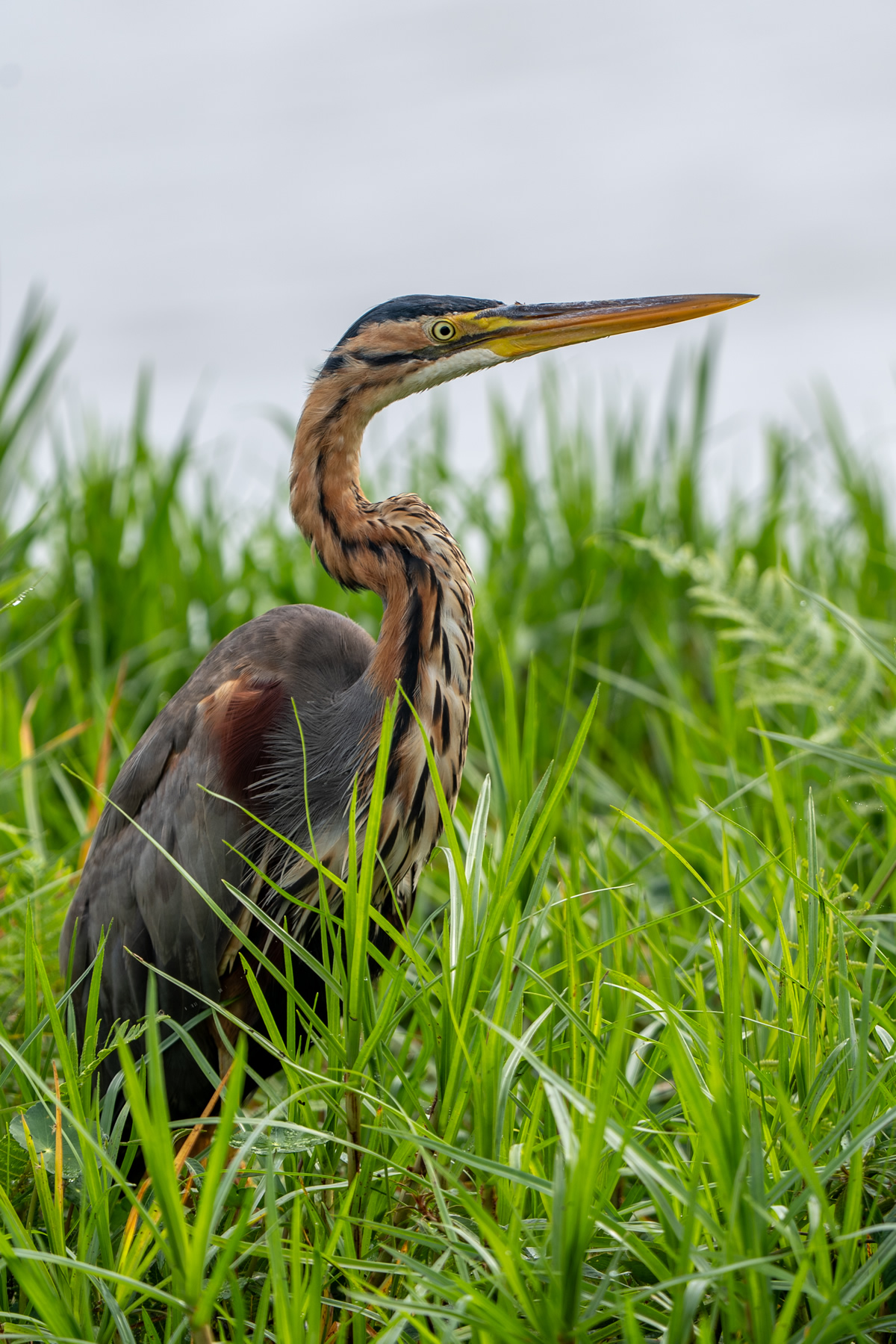
For birdwatchers, the Kazinga Channel is a destination in its own right. Kingfishers wait patiently above the water, African Fish Eagles call from tall trees, while pelicans, cormorants, herons and storks share the same shoreline. There is hardly a moment when your binoculars remain at rest.
As the afternoon light becomes softer, the reflections on the water change once again. The channel gradually grows quieter, bringing another memorable day to a peaceful close.
Today's Highlights
- Morning game drive
- Afternoon boat cruise on the Kazinga Channel
- Outstanding waterbird diversity
- Close wildlife encounters from the water
Today's Habitat
Freshwater Ecosystems
Water shapes life in Queen Elizabeth National Park. Rivers, wetlands and lakes create feeding grounds, breeding sites and migration corridors for an astonishing variety of birds and mammals. The Kazinga Channel is one of the finest examples of how a single waterway can support an entire ecosystem.
Signature Species
- African Fish Eagle
- Pied Kingfisher
- Giant Kingfisher
- Saddle-billed Stork
- Great White Pelican
- African Skimmer (seasonal)
Pure Nature Moment
On the water, everything seems a little slower. Distances become harder to judge, sounds travel farther, and wildlife appears remarkably at ease. It is often here, quietly drifting along the shoreline, that you realise observation is not only about looking—it is also about giving nature the space to carry on undisturbed.

Day 8
Route: Queen Elizabeth National Park – Ishasha Sector
Overnight: Enjojo Lodge
This morning, you continue south through Queen Elizabeth National Park towards the remote Ishasha Sector.
The journey itself tells the story of another changing landscape. Open savannah gradually gives way to fig trees, riverine woodland and scattered forests. Here, Uganda reveals how seamlessly one ecosystem blends into the next, each bringing its own wildlife and birdlife.
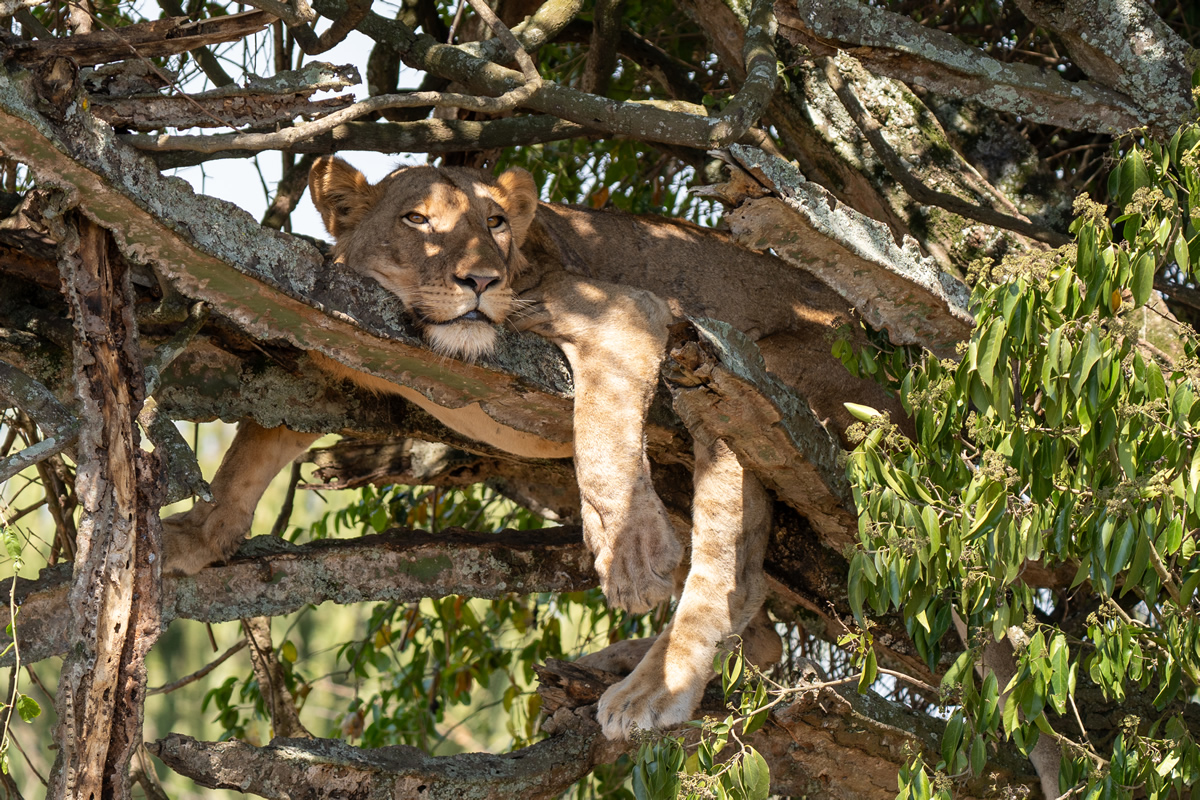
Ishasha is best known for its famous tree-climbing lions. No one can predict where they will spend the day—or whether they will choose the branches of a fig tree or remain hidden in the tall grass below. Like so much in nature, every sighting is a gift rather than an expectation.
For birdwatchers, however, Ishasha offers far more than its celebrated lions. The mixture of open grassland, woodland and seasonal wetlands creates ideal conditions for a fascinating variety of species. Every stop along the way reveals something new, from colourful bee-eaters and rollers to impressive birds of prey scanning the plains.
As the afternoon draws to a close, the distant outline of the Virunga Volcanoes begins to appear on the horizon. They are still far away, yet they quietly announce the next chapter of your journey. Tomorrow, the road leads into one of Africa's oldest and most extraordinary mountain forests.
Today's Highlights
- Journey through the Ishasha Sector
- Birding in woodland and open savannah
- Search for the famous tree-climbing lions
- Changing landscapes towards Bwindi
- Views of the distant Virunga Volcanoes—if they decide to reveal themselves
Today's Habitat
Woodland Savannah
Ishasha forms a natural transition between the open savannah of Queen Elizabeth National Park and the montane forests further south. Fig trees, acacia woodland, rivers and grasslands create a rich mosaic of habitats, supporting an impressive diversity of birds and mammals.
Signature Species
- Black-headed Gonolek
- African Grey Hornbill
- White-headed Barbet
- Rufous-bellied Heron
- Bateleur
- Brown Snake Eagle
Pure Nature Moment
Nature rarely changes all at once. Sometimes it happens so gradually that you only notice it when you look back. Somewhere along today's journey, the open plains quietly gave way to woodland, the air became cooler, and the distant silhouette of the mountains appeared. Without realising it, you have already begun your journey towards Bwindi.

Day 9
Route: Ishasha Sector – Bwindi Impenetrable Forest
Distance: approx. 90 km
Driving time: approx. 3 – 3.5 hours
Overnight: Gorilla Mist Camp
The day begins in the quiet landscapes of Ishasha, where the first light slowly reaches the fig trees and open plains. Before continuing south, there is time for one final morning drive. At this early hour, birds are already active, the air is cool, and the wilderness feels wonderfully unhurried.
Leaving the savannah behind, the road gradually climbs into the highlands of southwestern Uganda. Wide open grasslands give way to rolling hills, terraced farms and small villages that seem to blend naturally into the landscape. Around every bend, the scenery changes a little more, offering another reminder of how seamlessly Uganda's landscapes change.
By midday, the distant forests of Bwindi begin to dominate the horizon.
Unlike many national parks, Bwindi does not reveal itself all at once. It slowly emerges through drifting mist, steep valleys and densely forested ridges until, almost without noticing, you find yourself surrounded by one of Africa's oldest rainforests.
Your destination today is the Ruhija Sector, a quieter and less-visited part of Bwindi Impenetrable National Park. Perched high in the mountains, Ruhija is renowned among birdwatchers for its exceptional diversity and the opportunity to observe several of the Albertine Rift's rare endemic species.
After arriving at the lodge, the afternoon is yours to enjoy at your own pace. Perhaps you take a gentle walk around the grounds, watch colourful sunbirds visiting flowering shrubs, or simply sit on the terrace as clouds drift through the forested hills. There is no need to hurry.
Tomorrow is not about searching for gorillas.
Tomorrow is about learning the language of this remarkable forest.
Today's Highlights
- Morning game drive in Ishasha
- Journey into Bwindi's mountain forests
- Arrival in the Ruhija Sector
- A quiet afternoon surrounded by ancient forest
Today's Habitat
Albertine Rift Montane Forest
Situated at elevations of over 2,000 metres, the forests of Ruhija form part of the globally important Albertine Rift biodiversity hotspot. Cool mountain air, ancient trees and dense undergrowth create ideal conditions for many bird species found nowhere else on Earth.
Signature Species
- Regal Sunbird
- Rwenzori Batis
- Handsome Francolin
- Dusky Crimsonwing
- Archer's Robin-Chat
- Stripe-breasted Tit
Why We Love This Place
Ruhija has a character all of its own. Perched high on the forested ridges of Bwindi, it offers a quieter side of the national park—one where mornings begin with birdsong drifting through the mist and the pace of life slows naturally. It is a place that invites observation rather than haste, making it the perfect introduction to one of Africa's most extraordinary forests.
Pure Nature Moment
Every great forest asks for the same thing: time. Not because it is difficult to understand, but because it never reveals everything at once. As evening settles over Ruhija and the mist begins to weave through the trees, you realise that tomorrow is not about finding something extraordinary. It is about becoming part of a place that has been here long before us—and will hopefully remain long after we are gone.

Day 10
Route: Short excursions in the surrounding area
Overnight: Gorilla Mist Camp
The forest awakens long before the sun reaches the canopy.
As dawn breaks over the mist-covered hills of Ruhija, the first birds begin to call from deep within the trees. Some voices are clear and familiar, others so subtle that only experienced local guides can recognise them. Here, the day begins not with a spectacular sight, but with sound.
Today is dedicated to exploring one of Africa's finest birding destinations.
The Ruhija Sector is celebrated among birdwatchers for its remarkable concentration of Albertine Rift endemics—species found nowhere else on Earth. Walking slowly along forest trails, your guide helps you discover the small details that make this ecosystem so extraordinary. A flash of colour high in the canopy, a quiet movement among moss-covered branches, or a distinctive song drifting through the mist may all lead to unforgettable observations.
Yet birdwatching in Bwindi is about far more than adding names to a checklist.
The ancient forest reveals itself gradually. Towering trees support orchids and climbing vines, giant ferns line the trails, and colourful butterflies dance through patches of sunlight. Every step offers another reminder that this rainforest has evolved over thousands of years into one of the richest ecosystems on the African continent.
As the afternoon unfolds, there is time to enjoy the peaceful surroundings of your lodge or simply absorb the atmosphere of the forest. Tomorrow brings another extraordinary experience, but there is no sense of anticipation or urgency.
Today belongs entirely to the forest.
Today's Highlights
- Full-day birding in the Ruhija Sector
- Search for Albertine Rift endemic species
- Guided forest walks with experienced local birding guides
- Relaxing afternoon overlooking the rainforest
Today's Habitat
The Albertine Rift Highlands
The forests surrounding Ruhija lie within one of the world's most important biodiversity hotspots. Their isolation over thousands of years has allowed countless plants and animals to evolve independently, creating an ecosystem found nowhere else on Earth.
Signature Species
- African Green Broadbill
- Regal Sunbird
- Rwenzori Batis
- Handsome Francolin
- Archer's Robin-Chat
- Shelley's Crimsonwing
Pure Nature Moment
Birdwatching changes the way you experience a forest. At first, you search for movement. Later, you begin to recognise individual calls. Eventually, you realise the forest has been speaking all along—you simply needed time to understand its language.

Day 11
Route: Ruhija Sector
Distance: Short transfers within the sector
Overnight: Gorilla Mist Camp
Some moments cannot be scheduled.
You can prepare for them, travel thousands of kilometres to reach them, and hope for favourable conditions—but nature always has the final say.
After breakfast, you make your way to the starting point of today's Gorilla Trekking experience in the Ruhija Sector. Following a briefing by the Uganda Wildlife Authority rangers, your small group sets off into the forest.
No two treks are ever the same.
The route depends entirely on where the gorilla family has chosen to spend the night and how far they have travelled since dawn. Sometimes the walk is gentle. Sometimes it is demanding. The forest decides the pace, and everyone follows with patience and respect.
Yet, unlike a few days ago, the forest no longer feels unfamiliar.
The birds you learned to recognise yesterday are still calling from the canopy. Sunlight filters through towering trees, butterflies drift across the trail, and the scent of damp earth rises with every step. The journey itself has become part of the experience.
Then the ranger quietly raises a hand.
The group stops.
Only a few metres ahead, movement among the leaves catches your attention.
A young gorilla climbs effortlessly through the undergrowth. Nearby, a mother gently cradles her infant, while the silverback watches over the family with quiet confidence.
For one precious hour, you simply observe.
There is no performance. No expectation. No attempt to create a perfect photograph.
The gorillas continue with their daily lives, seemingly indifferent to your presence. You are not the centre of this story.
You are simply fortunate enough to witness it.
As you leave the forest behind, many visitors find themselves speaking more softly than before. Not because words are difficult to find, but because some experiences are best carried in silence.
Today's Highlights
- Mountain Gorilla Trekking in the Ruhija Sector
- One precious hour with a habituated gorilla family
- Guided rainforest experience with Uganda Wildlife Authority rangers
- Time to reflect after the trek
Today's Habitat
The Mountain Gorilla Forest
The forests of Bwindi are among the last strongholds of the endangered mountain gorilla. Every trekking permit directly contributes to protecting this remarkable ecosystem, supporting conservation efforts, research, and the surrounding communities that help safeguard the forest for future generations.
Signature Species
- Mountain Gorilla
- Rwenzori Turaco
- Regal Sunbird
- African Green Broadbill
- Black-faced Rufous Warbler
- L'Hoest's Monkey (often encountered in the forest)
Pure Nature Moment
People often remember the moment a gorilla looked towards them. Yet what stays with many travellers even longer is something far less obvious: the realisation that, for one brief hour, they were allowed to enter another world without changing it. Few wildlife encounters carry such a responsibility —and such a responsibility.

Day 12
Route: Ruhija Sector – Lake Mburo
Distance: approx. 300 km
Driving time: approx. 6 hours
Overnight: Mihingo Lodge
This morning, you leave the mist-covered hills of Bwindi behind and begin your journey towards Lake Mburo National Park.
The landscape changes once again. Dense rainforest gradually opens into rolling hills, scattered acacia trees and wide grassy plains. It is a quieter transition than before, almost as if the journey itself is gently slowing down.
Lake Mburo may be Uganda's smallest savannah national park, but it has a character entirely its own. Without large crowds or long distances to cover, it invites a different way of experiencing nature—one that rewards patience, observation and an appreciation for the smaller details.
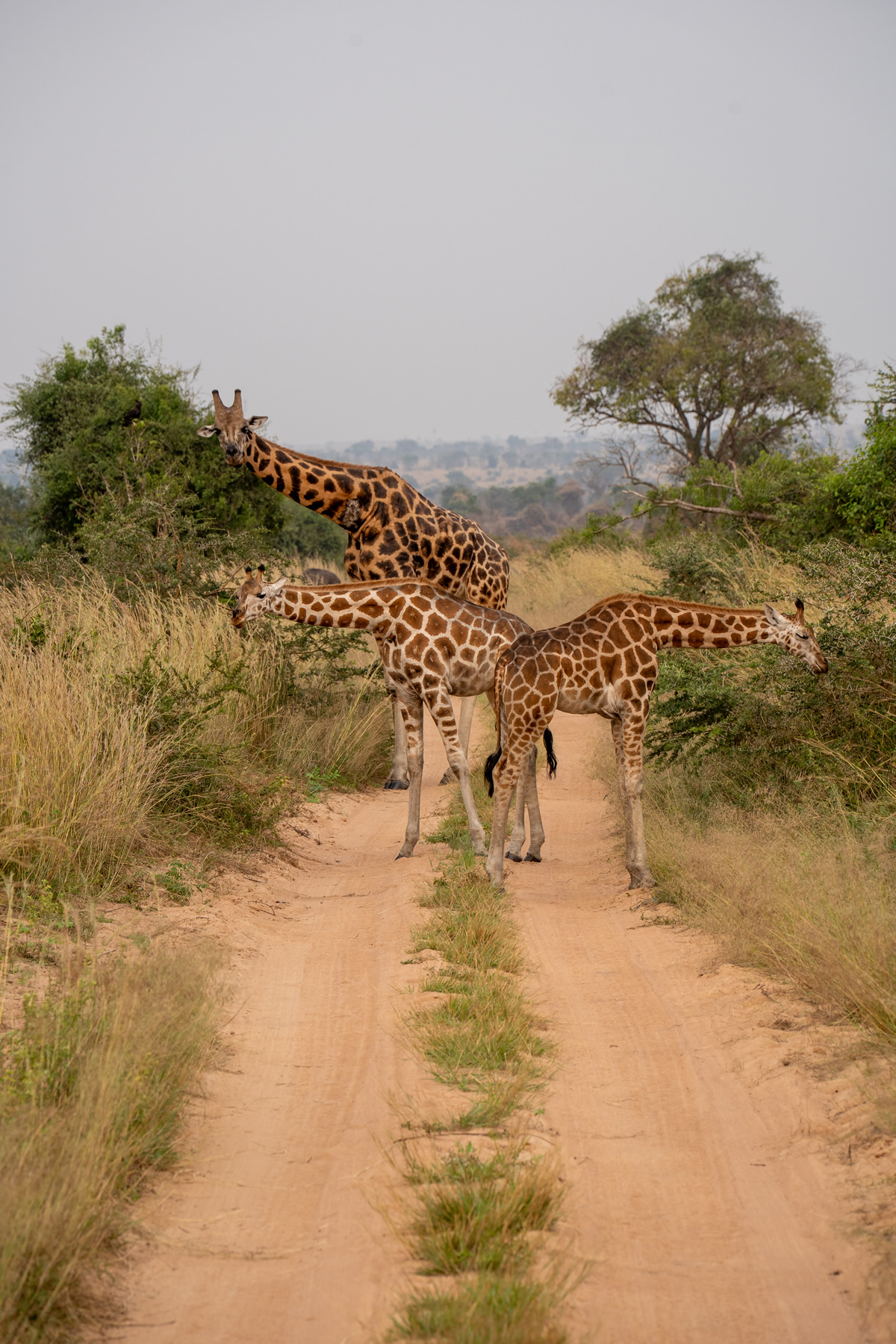
After arriving at your lodge, there is time to settle in before heading out for an afternoon game drive. Zebras graze across the open plains, elegant impalas move through the acacia woodland, while giraffes browse peacefully among the treetops. The park is also home to an impressive variety of birds, making every stop an opportunity to discover yet another species.
As the sun begins to set, warm golden light transforms the landscape once again. The silhouettes of umbrella-shaped acacias stretch across the grasslands, and the sounds of the African bush slowly replace the silence of the forest you left behind only a few hours earlier.
Today's Highlights
- Journey from the mountains to Lake Mburo National Park
- Afternoon game drive
- Birdwatching in acacia woodland and wetlands
- First impressions of Lake Mburo's unique landscape
Today's Habitat
Acacia Woodland
Lake Mburo is dominated by open grasslands, seasonal wetlands and acacia woodland, creating one of Uganda's most distinctive ecosystems. This mosaic of habitats supports a remarkable variety of mammals and more than 350 recorded bird species.
Signature Species
- Red-faced Barbet (one of Lake Mburo's specialties)
- Coqui Francolin
- Bare-faced Go-away-bird
- Brown-chested Lapwing
- Lilac-breasted Roller
- African Finfoot (occasionally along wooded shores)
Pure Nature Moment
Every journey has its own rhythm. After the dense forests of Bwindi, the open landscapes of Lake Mburo feel almost effortless. The horizon widens, the light changes, and the world seems to breathe a little more deeply. Sometimes, the greatest luxury in nature is simply the feeling of space.

Day 13
Route: Short excursions in the surrounding area
Overnight: Mihingo Lodge
As your journey through Uganda draws towards its final chapter, Lake Mburo offers one last invitation—to experience nature from a different perspective.
Unlike most national parks, Lake Mburo allows you to explore the wilderness on foot. Accompanied by an experienced ranger, you leave the vehicle behind and walk quietly through the acacia woodland. Every sound feels closer, every track in the soft earth tells a story, and familiar wildlife suddenly appears from an entirely new perspective.
Without the distance created by a safari vehicle, even the most common encounters become surprisingly intimate. A herd of zebras grazing nearby, the graceful movement of impalas through the grass, or a giraffe quietly browsing among the acacias all remind you that walking changes not only what you see, but how you experience it.
Later in the day, the rhythm slows once more as you explore Lake Mburo itself by boat. Papyrus fringes the shoreline, kingfishers dart across the water, while fish eagles call overhead. Hippos rest quietly in the shallows, and crocodiles bask along the banks, sharing the lake with an astonishing variety of waterbirds.
There is no sense that the journey is coming to an end.
Only gratitude for everything it has revealed along the way.
Today's Highlights
- Guided walking safari with an armed ranger
- Boat safari on Lake Mburo
- Close wildlife encounters on foot
- Excellent opportunities for birdwatching and photography
- A peaceful final evening in the African wilderness
Today's Habitat
Lakes and Papyrus Wetlands
Lake Mburo's freshwater habitats complement its open grasslands and acacia woodland, creating an important refuge for fish, reptiles, mammals and an exceptional variety of waterbirds. Together, these habitats form one of Uganda's most diverse small ecosystems.
Signature Species
- African Finfoot
- Papyrus Gonolek
- Malachite Kingfisher
- African Fish Eagle
- Giant Kingfisher
- Saddle-billed Stork
Pure Nature Moment
When a journey begins, we often look ahead, wondering what we might see. By the end, we find ourselves looking more carefully at what is already around us. Perhaps that is nature's quietest lesson—not to search for extraordinary moments, but to notice the extraordinary in ordinary ones.
Day 14
Route: Lake Mburo – Entebbe Airport
Distance: approx. 240 km
Driving time: approx. 6 hours
Overnight: —
The final morning begins gently.
Perhaps with one last cup of Ugandan coffee, the sounds of birds greeting the new day, and a quiet moment to look out across the landscape that has been your home for the past two weeks.
After breakfast, you begin the journey back towards Entebbe.
The road feels familiar now. Rolling hills gradually give way to open countryside, busy towns and roadside markets. Along the way, everyday life unfolds once more—children walking to school, farmers tending their fields, bicycles carrying impossible loads. It is a reminder that Uganda is not only defined by its extraordinary wildlife, but also by the warmth, resilience and hospitality of its people.
One final stop awaits at the Equator.
For many travellers, it marks more than a geographical landmark. It is a quiet moment to pause, reflect, and realise just how much this journey has offered. The memories you take home are not measured only in photographs or species lists, but in countless moments of discovery, shared conversations, early mornings, laughter around the dinner table, and the privilege of spending time in places where nature still sets the rhythm of life.
By late afternoon, you arrive in Entebbe, where your guide accompanies you to the airport for your onward journey.
As you leave Uganda behind, one thought often remains.
This was never simply a safari.
It was an invitation to see nature a little differently.
Today's Highlights
- Scenic drive back to Entebbe
- Equator crossing
- Local markets and changing landscapes
- Time to reflect on your journey
- Airport transfer
Today's Habitat
A Country of Many Worlds
Over the past fourteen days, you have travelled through papyrus wetlands, tropical rainforests, open savannahs, mountain forests, freshwater lakes and acacia woodlands. Few destinations offer such extraordinary ecological diversity within a single journey.
Pure Nature Moment
Every journey changes us in ways we rarely notice at first. Long after the photographs have been shared and the suitcase has been unpacked, certain moments quietly return—a bird call at sunrise, mist drifting through the forest, the stillness of the Kazinga Channel, or a silent glance exchanged with a mountain gorilla. Nature has a remarkable way of staying with us, long after we have left it behind.